
ORena SAVE FOCUS Challenge — SEGMENT Track
Foreign Object Contextual Understanding in Surgery
Highlighted announcements
Looking forward to the results announcement at MICCAI (1 October 8:30 am CEST)! |
Short-video surgical VQA for foreign object understandingThis is the SEGMENT Track of the ORena SAVE FOCUS Challenge. The track evaluates whether vision-language models can answer clinically relevant questions from short laparoscopic video segments of up to 5 minutes, focusing on local temporal context, foreign object interactions, short-term tracking, and action understanding. The broader ORena SAVE FOCUS Challenge benchmarks vision-language models on clinically grounded visual question answering for foreign object understanding in minimally invasive surgery. The goal is to advance AI methods that can support intraoperative quality assurance and patient safety. The SEGMENT Track bridges single-image surgical scene understanding and long-context procedural reasoning. It tests whether models can integrate events across time within a bounded video context before participants move to the more demanding PROCEDURE Track. |
Start here |
Why this challenge matters
Clinical relevanceIn minimally invasive surgery, foreign objects such as sponges, needles, clips, drains, specimen bags, and similar objects may be introduced into the abdominal cavity during a procedure. Retained foreign objects after major operations are rare but clinically relevant adverse events associated with patient harm [Badiee et al., 2025]. |
Technical challengeForeign object understanding in short videos requires models to combine visual recognition with local temporal reasoning. Long-video benchmarks have shown the importance of evaluating models beyond isolated images by requiring reasoning over extended visual context [Wu et al., 2024]. |
Benchmark at a glance
|
Task type Surgical video question answering |
Input Video segment up to 5 min, meta data (type of procedure, timestamps) + question |
Output Short text answer |
Focus Short-term foreign object understanding |
|
SEGMENT time budget 15 seconds per question |
SEGMENT hardware 80GB VRAM GPU |
Prize pool $60k+ across tracks |
Submission Docker container |
The three ORena SAVE FOCUS tracks
FRAME
|
SEGMENT
|
PROCEDURE
|
SEGMENT Track
The SEGMENT Track evaluates a model’s ability to answer clinically relevant questions from a short laparoscopic video segment of up to 5 minutes. The task targets surgical video understanding skills such as:
- foreign object identification and identity matching over short video segments
- local temporal reasoning within a bounded video context
- foreign object counting
- recognition of insertion, manipulation, or removal events
- complex reasoning in a short video segment context
The input consists of a video segment and a question. The submitted algorithm must return a text answer. All methods must be fully automated.
Algorithm inputVideo segment up to 5 min, meta data (type of procedure, timestamp) + question Exact input format will follow the official submission template repository. |
Algorithm outputShort text answer Exact answer formatting and validation details will follow the official submission template repository. |
Data and scientific background
The first released data batch, HeiCo-FOCUS, is based on Heidelberg colorectal surgery videos and provides clinically grounded VQA pairs for foreign object understanding. The dataset covers five capability categories: object recognition and identity matching, temporal grounding, aggregation, event and procedural understanding, and complex reasoning.
The SEGMENT Track builds on prior work in surgical visual question answering, where models answer clinically relevant questions from surgical scenes [Seenivasan et al., 2022].
The SEGMENT Track also connects to the broader development of long-video understanding benchmarks, which evaluate whether multimodal models can reason beyond isolated frames and short static contexts [Fu et al., 2025].
For the SEGMENT Track, the focus is on the short-video part of this benchmark. This provides a controlled setting for evaluating whether models can use local temporal context to reason about foreign objects, their interactions, and brief action sequences before moving to long-context reasoning in the PROCEDURE Track.
|
First data batch HeiCo-FOCUS VQA |
Number of videos 30 |
Expert involvement Clinical and technical experts |
Motivation Foreign object safety and short term context understanding |
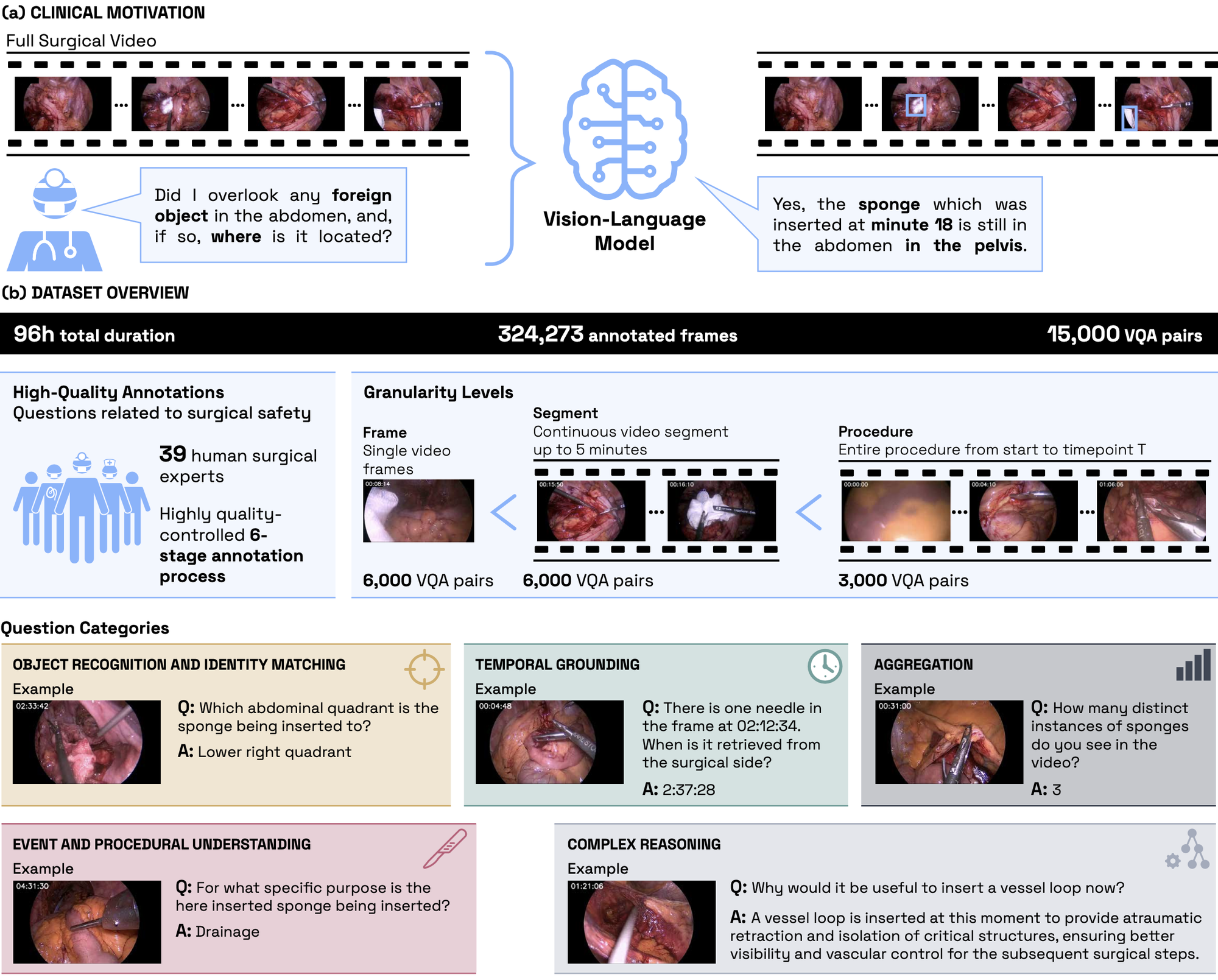
Figure 1: Overview of the HeiCo-FOCUS benchmark, showing a) the clinical motivation and b) providing an overview of the first batch dataset.
|
Second data batch LapChole-FOCUS VQA |
Number of videos 170 |
Expert involvement Clinical and technical experts |
Motivation Foreign object safety |
Submission and evaluation
- Submissions must be made through the challenge website.
- Algorithms are submitted as Docker containers.
- Containers must run without internet access.
- Inference is limited to a single GPU.
- The SEGMENT Track time budget is 15 seconds per question on an 80GB VRAM GPU.
- During pre-evaluation, each team may submit up to 10 times, subject to possible adjustment depending on compute constraints.
- Only teams that beat the baselines on the leaderboard proceed to the final test stage.
- Teams must submit a method description with sufficient technical detail for interpretation of the results.
Prizes and recognition
$60k+ prize poolA prize pool of at least $60k has been secured across the ORena SAVE FOCUS Challenge tracks. The SEGMENT Track is planned to receive approximately 40% of the total prize money. |
Publication opportunityTeams that beat the baselines may be invited as co-authors on the planned challenge publication, subject to the official rules and submission requirements. |
Resources
| Registration | Register for the ORena SAVE FOCUS Challenge |
| Central forum | ORena SAVE FOCUS Forum |
| First data batch | HeiCo-FOCUS VQA on Hugging Face |
| Second data batch | LapChole-FOCUS VQA on Hugging Face |
| Python package | orena-focus GitHub repository |
| Submission template | Submission template on GitHub |
Webinar recording
The ORena SAVE FOCUS webinar recording is available here after May 28th: